Power Thrives on Rigid Labels. Democracy Thrives on Values.
Politics

How an amoral metaphysics enables social power to influence shared cultural dialogue in an untold number of ways. Thankfully there's a solution.
audio-thumbnail
Power Thrives on Rigid Labels. Democracy Thrives on Values. (Audio)
0:00
/1015.587755


One of the central failures of Bernie Sanders and much of the modern American left is a persistent failure to clearly distinguish socialism from democratic socialism, and more broadly, a failure to appreciate what kind of power each actually entails. When asked about the socialist label, Bernie has been all too proud to speak of how great that term is while seeking economic justice and that Americans were wrong to think otherwise.

Following much of Bernie’s lead the “socialist” label is often worn casually, even proudly, among American leftists since Bernie's rise. What goes largely unexamined though - is what that label quietly smuggles in: not care, not fairness, but an acceptance of social-level power concentrating under the cover of higher intellectual or moral authority. Cries that capitalism’s immorality can only be solved through socialism or communism are common, but they miss the deeper problem entirely.

The issue isn’t capitalism as such - it’s what values control culture, and who and what gets to enforce them.

Under socialism or communism, elites don’t disappear; they simply rule in a different way. Power concentrates in the hands of those who claim superior knowledge, superior theory, or superior moral insight. Control is exercised not openly as social power, but indirectly through intellectual authority - through “reason”, “expertise”, and claims of technocratic inevitability. Exploitation doesn’t vanish; it’s concealed and justified as rational, unavoidable, or morally required in the name of the greater good.

Democratic socialism, by contrast, at least aims to keep power with the people rather than surrendering it to a self-authorising intellectual class. An informed public, representing intellectual and Dynamic morality, can curtail social-level power rather than merely replacing one elite with another.

Of course, democratic socialism is not without risks. Corruption of elected officials, institutional inertia, and complacency are all real dangers.

Capitalism, meanwhile, plays a more nuanced role than it’s usually given credit for by these socialist types. Its financial incentives often provide genuine responsiveness to Dynamic Quality - to change, innovation, and adaptation - in ways centrally organised systems frequently struggle to match. That responsiveness matters, and when it works well it can surface new value quickly.

But capitalism also carries a serious moral flaw of its own. It has a tendency to quietly smuggle social-level power in under the banner of Dynamic success. Wealth accumulation, market dominance, and scale are too easily mistaken for proof of superior value, when in reality they often reflect the consolidation of power rather than the emergence of better ideas or practices. Left unchecked, capitalism doesn’t just respond to Dynamic Quality - it converts social power into permanence, allowing those who win early or win big to shape the rules in their favour. Capitalism alone, then, is no more virtuous than socialism alone. Both become immoral when they’re absolutised.

Calls for pure capitalism or pure socialism are therefore deeply flawed, not because each lacks moral intention, but because both allow social-level power to masquerade as something higher. Socialism tends to justify power through claims of intellectual or moral certainty. Capitalism tends to justify it through claims of market success and efficiency. In both cases, social-level power sneaks in beneath a higher moral code and then shields itself from challenge.

A functioning democracy is different. It is not a moral system run by the socially powerful. Its value lies in its ability to respond to Dynamic Morality. Democracy matters not only because it allows a minority to become a majority, but also because its function is to prevent a socially powerful minority from imposing its will on the majority. When functioning correctly, it keeps social-level power unstable, accountable, and open to correction.


From an MOQ perspective, democracy’s moral strength is precisely this openness. It does not freeze value at the social or intellectual level. Instead, it creates the conditions under which better ideas, better arrangements, and better values can emerge over time. When democracy fails, it is usually because this Dynamic function has been undermined, not because democracy itself was the problem.

This is also why the endless framing of politics as a simple battle between “left” and “right” has become so unproductive. These labels increasingly obscure more than they reveal. They collapse complex moral questions into tribal identities and encourage people to defend camps rather than examine values. Democracy is not about choosing between rigid ideological extremes - socialist, capitalist, fascist, or otherwise - but about maintaining a culture capable of evaluating and revising its values over time.

When politics is reduced to label warfare, attention shifts away from whether ideas improve lives and toward whether they signal loyalty to a side. This replaces Dynamic intellectual moral inquiry with static ideological allegiance. The result is not democratic vitality but cultural stagnation, where extremes feed off one another and genuine moral progress is crowded out by symbolic conflict.

This left–right framing is also highly useful to social-level power. By organising politics around opposing identities rather than shared values, power becomes harder to see and easier to excuse. Decisions that shape culture and material life can be blamed on “the other side” instead of traced back to concentrated influence operating above those divisions. This redirects conflict horizontally between groups, preventing it from turning vertically toward the social power that actually shapes culture and undermines democracy’s intellectual and Dynamic function.

Take deindustrialisation and deregulation, for example. These policies, most responsible for hollowing out the American middle class, were not the product of a single party or a sudden moral failing among voters. They were the result of decades of elite-driven neoliberal policy embraced across the political spectrum and justified through an amoral metaphysics that presented this economic framework as objective, inevitable, and beyond democratic challenge. Communities were dismantled, jobs shipped overseas, and social bonds eroded in the name of efficiency and growth as defined by those already in positions of power.

Parties on both sides whilst all this was happening were disagreeing for sure. But not coincidentally only one set of values found its expression - that of the socially powerful.

This is precisely what the Metaphysics of Quality makes visible: morality is not found in rigid idealistic systems, but in how well cultures remain open to Quality and un-corrupted by the socially powerful over time.

The real failure of the American left generally, then, has been its growing comfort with elitist attitudes and its failure to clearly distance itself from them in the public consciousness. This failure has led to the increasingly accurate equation of “leftist” with “elitist” in the minds of many working-class voters. It wasn’t simply that the working class “turned right”; it was that they were abandoned, dismissed, or spoken down to by people who claimed moral authority while neglecting material and social realities.

This attack on “elitist leftists” by the American right still hasn’t ended. And it continues to land because the underlying attitudes that provoked it - moral policing, condescension, and a refusal to listen - have not meaningfully changed.

This persistence is due to a continued blind spot across much of the American left itself: a failure to recognise how social-level power continues to shape not only the culture at large, but their own understanding of it. Through the lens of the Metaphysics of Quality, this is a familiar mistake - confusing social status and intellectual confidence with intellectual morality, and mistaking certainty for clarity.

Rather than listening to or materially helping people who had been economically and culturally hollowed out, the left has increasingly defaulted to scolding. A set of ‘woke’ attitudes emerged that functioned less as expressions of care and more as mechanisms of social control. Language, posture, and symbolic purity became the focus, while material conditions were sidelined.

Scolding is the primary way power relates to the people. This is not how healthy cultures are built. It is how elites manage populations they do not want to understand or meaningfully engage with.

To top it all off - technology hasn’t helped either. Rather than just opening culture up to better ideas, it has overwhelmingly rewarded outrage, straw-man over-simplification, and tribal loyalty. Modern American political influencers on both sides feed off rapid news cycles and algorithmic incentives that encourage blind allegiance to one social-level side. This technology-driven dialogue replaces open intellectual inquiry with social-level allegiance. Disagreement is treated as betrayal rather than an opportunity for improvement.

The result of all this is a culture increasingly convinced that it is deeply and irreparably divided. But this framing is profoundly misleading. What appears as division is more accurately a population that has been fragmented by narratives shaped by social-level power. Narratives that benefit from distrust, resentment, and perpetual conflict.


The rise of the authoritarian modern right did not emerge from nowhere then, nor was it simply the product of ignorance or manipulation. It arose from the material and cultural vacuum left behind when bi-partisan policies stripped people of stability, dignity, and meaningful work. And politicians did so while keeping folks divided and that these economic circumstances were merely the neutral operation of the economy and not something in their control or up for discussion.

When the damage became impossible to ignore, the response from the socially powerful on both sides was not listening or reform, but further moral chastisement. Blaming the poor for their own failures. Structural harm was reframed as personal or cultural failure, allowing elites to avoid responsibility for the conditions they had helped create.

From an MOQ perspective, this is exactly what happens when social-level power hides behind an amoral intellectual framework. The degradation of culture toward reactionary social quality is rebranded as inevitable, and the resulting anger is pathologised rather than understood.

What followed was not a mysterious turn toward reaction, but a predictable response to a culture quietly hollowed out in the name of social-level power, all in plain sight.


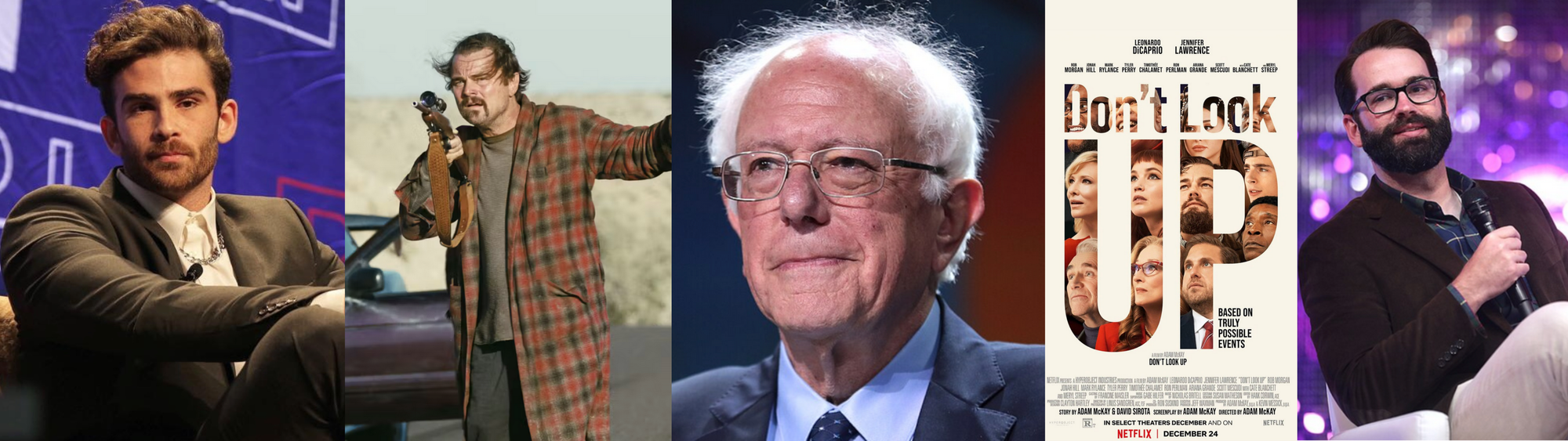
The popularity of One Battle After Another among American left audiences is a telling example of this intellectually blind attitude of elites. It's structured around opposition rather than discovery. Its narrative defines characters and meaning through fixed camps, where the enemy is already known and resistance is the only remaining task. Because the story depends on maintaining this clarity, it never turns its attention to the deeper forces that produced the conflict in the first place. Power remains offstage, while identity and opposition take centre stage.

This makes the film counterproductive to what it most needs to do. At the moment the culture requires a renewed focus on shared values and the structures shaping division, the film reinforces a left-versus-right framing that stabilises social-level identities instead of opening space for intellectual or Dynamic inquiry. Division is not a result of the story. It is a requirement of its narrative logic.

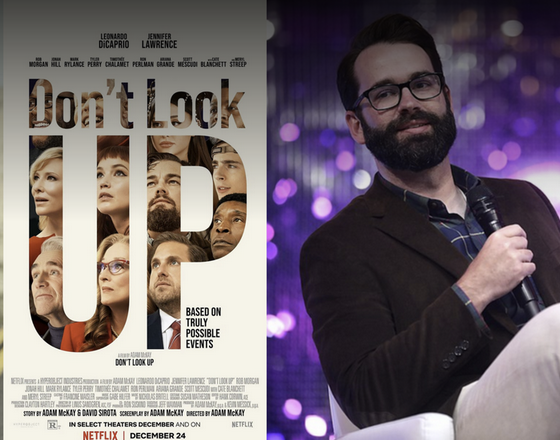
Don’t Look Up - the other popular political film from recent times - for all its strengths, suffers from a different but related limitation. It builds its narrative around the gap between those who know the truth and a public that refuses to act. The tension of the story comes from apathy, distraction, and denial in the face of overwhelming evidence. Catastrophe is framed as the result of cultural un-seriousness rather than structural design.

What the narrative largely leaves unexplored is how that apathy was produced. Media, incentives, and elite interests appear as absurdities rather than as forms of social-level power shaping behaviour at scale. The story stops at intellectual failure without tracing the suppression of intellectual and Dynamic Quality that made such failure predictable. The result is a satire that directs frustration toward the public, rather than toward the forces that benefit from confusion and inaction.

Because despite everything, people still do share remarkably similar underlying values: meaningful work, security, distrust of elites, and a genuine voice in shaping their future. What is fractured: is not the culture itself, but the language and metaphysics people are given to understand it.

Until that manipulation by the socially powerful is named explicitly, carefully, and without contempt, the same mistakes will continue to be made and the unproductive divisions will persist. Reminding folks of the social powers control doesn't solve the problem by itself. But what it does do is restore the culture’s ability to redirect conflict away from symbolic enemies and back toward the values and concentrations of power that can actually be corrected and change things for the better.

And this right here is one of the many strengths of the Metaphysics of Quality. It provides common folks a language and framework that is both logical and morally sound. It keeps evolutionary conflicts of morality at the front of mind whilst they evaluate elite suggestions. And the key here is that with this better metaphysics they can uniquely do so in the intellectual language of the elites. Thus uniquely enabling common folks to perform their vital role in ensuring both Dynamic and intellectual morality are served. And that’s a very powerful thing indeed!


TOPICS:
WAR - The Final Stage of Social Level Power Control
Politics

audio-thumbnail
WAR - The Final Stage of Social Level Power Control (Audio)
0:00
/329.862676


I first came across Dennis Kucinich when he ran for president in 2004. He stood out as someone whose policy ideas I mostly agreed with - especially his unique proposal for a Department of Peace. It was a proposed cabinet-level office devoted to projecting some of America’s best values into the world: democracy, justice, human rights and peace.

The vision of a department promoting peace was simple but profound: a world where countries appreciated their uniqueness and worked to resolve disagreements democratically and peacefully.

The idea wasn’t unique to Kucinich; it went all the way back to Benjamin Rush, one of the Founders, who dreamed of a Peace Office to balance the War Office. But Kucinich made this old idea feel alive again. One that wasn't merely tied to religion as Rush had done.

Recently too, Kucinich received some recognition for that advocacy; The Washington Post credited him as a kind of Bernie Sanders before Bernie was on the national stage. Knowing about this proposal - albeit long distance aspirational - gave me hope that America could still be guided by important intellectual values that promote Human Rights.

But now President Trump along with Secretary of Defence Pete Hegseth has almost completely undercut any progress Kucinich made in this more peaceful direction. America hasn't just stalled or slipped backward in theory - she's gone sharply in the opposite immoral direction.

Hegseth - with Trumps direction - has sought to symbolically rename the Department of Defence back to the Department of War. At first glance, it may seem like a small and symbolic change in rhetoric. But rhetoric from an administration with real power is never merely symbolic. It carries weight. It shapes how America or the administration acts, and how the world understands those actions.

Because why do people want to attack America? Hegseth and Trump probably think the answer is simple: “They’re evil”.

But evil doesn’t just appear out of nowhere. Something produces it. And if something produces it, maybe it can be stopped - not only with weapons, but also with prevention rooted in thought, morality, and understanding. In times the threat is real, there are also far more humane ways to respond - by capturing and providing people their habeas corpus rights rather than extra-judicially taking their lives. Under the law even, lethality is only ever an absolute last resort.

All this concern with legality or defending America, though, is now out the window. In its place, a new moral framework is taking shape - one where intellectual morality no longer guides social values. Instead, raw social-level power becomes the standard. This shift doesn’t just abandon defence - it replaces it with a philosophy that prizes dominance over principle.

This renaming of “Defence” to “War” celebrates this grotesque direction. It signals that the Trump administration appears to no longer want to protect through principle or restraint, but to project force with little regard for law, human rights, or deeper moral reasoning.

This is more than a change in rhetoric then - it’s a philosophical shift. It shows America stepping deeper into an unthinking embrace of social-level control. And the more that control spreads, the more intellectual morality withers. As intellectual morality withers - the social level gains further dominance seeking more power through unthinking force. The greed of social level power knows no bounds.

A war state is the final stage of this social level driven transformation - seeking power and dominance no matter the immoral cost - and America is increasingly becoming just that. Intellectual Morality be damned.

On days like today, it’s hard to be hopeful for the moral trajectory of the world. I worry deeply about what the next few years of this administration will bring. But I still hope that America’s laws and judicial system - designed to protect intellectual morality - will withstand the continual attacks from a President very clearly driven by a very different set of lower values.

If only folks knew of a better metaphysics - a better way - maybe then things could or would be different. With a strong and intellectually grounded moral compass, America could look not to a Department of War, but to a Department of Peace - much like Kucinich proposed years ago - and celebrate a very different set of higher morals.

While we watch aghast - it is the profound potential of this moral philosophy that provides hope.

TOPICS:
Politics

An attack on true Populism and the Intellectual & Dynamic Morality it represents.


I've been thinking lately about how fixating on “left” versus “right” is doing us all a disservice. These labels split us up on a huge number of issues where we agree on far more than we're traditionally told.

Overusing these labels turns politics into a team game. Elites and the media love to propagate the team games, often reducing things to cartoonish caricatures of “left” and “right.” While real talk about what truly matters, what is truly valuable for a nation or the world gets tossed aside. Suddenly it’s all about cheering for your team - a social construct - no matter what you actually believe or what the values at play truly are. Instead of genuine debate or discussing what's truly valuable, it becomes a game of shouting extreme political stereotypes at your opponents and claiming victory. Values and truth be damned!

This would be entirely depressing if it were the only way forward. But there is another view of politics, more pragmatic and less focused on ideals. More focused on what's truly valuable and what can actually be achieved. Populism it's called. Populism, a term created by farmers and common folks tired of being exploited by elites in the late 19th Century. Populism isn't about political calculations or manipulation. It's not about left or right, but instead it's a pragmatic viewpoint focused on finding what most common folks intellectually agree is best, and doing that.

Unfortunately, in today’s global political climate, where socially powerful elites dominate the conversation, finding that common ground or what folks think outside of elites is rare. This isn’t an accident. Stagnation and division serves the socially powerful as it ensures their rule is never challenged. In fact elites have also created and fostered the caricatures of either side of politics ensuring that a true intellectual renaissance of common man populism can never occur. 

Currently, the left sees itself as aligned with 'The Intellectuals' - elite academics and experts who claim to have a monopoly on truth. This fuels their moral superiority, allowing them to feel justified in dismissing not only figures like Trump but importantly, his supporters anti-elitist values too. In response, the right has framed itself as the challenger to this kind of elitism, taking on these elites who have at times made disastrous decisions in their own favor at the expense of the common man. But in doing so, figures like Trump have fueled a culture of conspiracy and anti-intellectualism in response, tapping into deep frustrations with the establishment.

The current political system then, while elite controlled, keeps us divided, so that we never come together and intellectually discover and act on our shared values. In line with this; at every turn since Populism's inception - the powerful on the social level have successfully sought to keep the general populations understanding of what exactly it is - blurred and confused. Just about every caricature known of the populists now is the opposite of what it was.

Racist? They occasionally fought and died along side their fellow blacks for their equal rights
Sexist? They had women in lead roles.
Anti-Intellectual Unthinking Mob? They often celebrated intellectual achievements and started as a movement using books and intellectual discussion to determine why they were getting screwed.
Authoritarian? They mostly made decisions as a collective and never really had any strong-man type leaders.

Thomas Frank writes about this campaign of the populists and their anti-populist elite opposition in his excellent book titled 'The People, NO'. Without knowing about this superior alternative though, folks can be and have been easily manipulated.


Enter Steve Bannon. Unlike Trump who all too often does and says things to contradict his 'populist' label (and is never called out for them by an uncaring elite media) his former political advisor Steve, in some ways, makes a stronger case to be labelled a populist. For example in a recent interview(above) he calls himself a 'neo-brandeisian'. This tag is in reference to the original populist lawyer named Louis Brandeis who is quoted as famously saying:

We may have democracy, or we may have wealth concentrated in the hands of a few, but we cannot have both.

And

“Sunshine is the best disinfectant.”

In the video above Bannon also speaks highly of former FTC chair Lina Khan who was one of the only few bright spots in a relatively lackluster Biden administration.

Finally, like the original populists, Bannon has argued that elites care little for international borders or the rule of law and undermine local workers by importing cheap labor from overseas. Importing cheap labor, neglecting rights and hurting not just the immigrants but the common folk is an immoral placing of social level power above the Human Rights of the workers. Indeed, Bannon takes this critique further and also notes that by undermining a culture through mass immigration, elites are able to undermine a sense of national identity fostering chaos and enabling further exploitation.


If this was all there was to Steve Bannon's "populism" then, that would be the end of it, we could rightly call him a populist and go home. Except unfortunately it isn't.

Nathan J. Robinson recently on Twitter points out some of the issue with his "populism". In the same way the Democrats latest elite supporting chair argues that there are 'Good and Bad Billionaires' - so too does Bannon. In his arguments for Trump and Musk, Bannon makes dubious claims as to why these Billionaires he deems as good, are at least somewhat immune from corruption:

'Trump doesn't have an elitist mentality' Bannon argues 'because he is a self made Billionaire'. 'Trump isn't an elitist.. he's an outsider'. After some thin prodding Bannon's arguments become even less strong when asked about Trump's elite Billionaire supporters: 'All of Trumps billionaire friends aren't elites, they support Trump!'.

So with Bannon's rose colored glasses, he believes that simply because Trump is self-made(he isn't) he will always have the nations best interests at heart(he doesn't). It takes very little scrutiny of Trump's actions, and especially of Musk's recent actions to see they clearly do not have the nations best interests at heart.

To point out an easy one - look at their (currently underway) dismantling of the Consumer Financial Protection Bureau. This Department costs 1 Billion dollars a year and has done far more good in protecting consumers against powerful elite run corporations than just about anything else. It's returned over 20 Billion to consumers through law enforcement over the last 10 years and protected Americans from further exploitation. Exploitation such as Facebook's recent attempt at becoming its own bank and creating money for itself and becoming an even greater undemocratic power in America and the world.

With this in mind then, it's somewhat of an irony that in 'religious' America the sins of greed, lust and power can be so easily dismissed by the likes of Bannon. The idea that if someone is rich enough or they are 'self-made', they no longer lust for more and will always have others best interests at heart is simply asinine. For the great majority of Billionaire's accumulated their wealth at least partly because they lusted for further power and their greed knew few bounds.

This understanding though is best summed up through the language of the Metaphysics of Quality(MOQ). Because those who understand the MOQ, understand that the conflict between social values and intellectual values is still ongoing. And at this moment, it's most profoundly being undermined with the aid of an amoral metaphysics at the hands of the socially powerful like Bannon, Trump and Musk.

Bannon has done more than anyone before him to muddy the waters between populism and elitism. By rolling out the red carpet for elites in his so-called “right-wing populist” movement and hyping up figures like Musk, he’s made it clear—this isn’t real populism. It’s a sham, a vehicle for grift, deception, and the erosion of anything truly valuable. Rather than being a movement about widespread intellectual enlightenment and a celebration of intellectual values - it's encouraged conspiracy and limited critical thought.

Like past anti-populists, Bannon has warped the meaning of the term, giving the elite media even more ammo to do the same. The result? The powerful have successfully misled everyday people about what genuine populism is—and what real change could look like.

When we begin to look at the reasons why Bannon might be deceptive in undermining the intellectual value of populism in this way there are a few that can be given.

  1. He can fundraise off true populist outrage.
  2. He can keep framing himself as an outsider despite having wealthy backers like the Billionaire Mercers.
  3. He actually prefers social level strong-man authoritarians rather than true populist common-man movements as evidenced by his working with 'soft' dictator Viktor Orban, and praise of Chinese Communist leader Xi Jinping.

Notably each of these reasons is about social level power. Either increasing his own, or admiring that of others. This is the opposite of what the populists were fighting for. Valuing social level power at the neglect of the intellectual value of fairness and the Dynamic Morality that can arise from that equal opportunity is wholly immoral.

There is far too much extreme inequality in America right now. Social level power drowning out the people in being able to choose what is intellectually right is immoral. There is a better way and the MOQ eloquently shows it to us.

TOPICS:
Politics

Yesterday I wrote about the above video in the context of the role Subject-Object Metaphysics(SOM) plays in undermining intelligent discourse in our media. Between a President and a media personality who both have the same ideological assumptions and are cheering on the same things. All while they do this with little to no intellectual scrutiny and little to no championing of intellectual values.

Today I'll write about this same video and the role identity politics plays in explaining Trump's racist policies.

Because identity politics has a way of splitting people up who have so much more in common regardless of their race. When we fixate on race, gender, or other biological markers, we miss the deeper layers that truly define us. We’re not just a collection of physical traits—we’re a blend of culture, experience, and shared values. And while an amoral Subject-Object approach neatly boxes us into racial categories and acknowledges their existence, it also undermines the increased freedom found in cultural values and leaves our cultural richness in the dust. That’s why the Metaphysics of Quality (MOQ) feels like such a breath of fresh air; it appreciates the nuances of life and emphasizes the importance of culture and our freedom to be who we wish.

By reducing us to our biology, SOM based identity politics creates more conflict than connection. Instead of uniting people around common interests and shared struggles, it enables the socially powerful to pit us against one another based on superficial differences. This narrow focus not only drives wedges between folks of the same class but also pushes racial conflicts to the extreme. The more we emphasize fixed identities, the more we enable an elitist conservative narrative that uses these divisions to bolster racist policies. When our identity is defined solely by what’s immediately visible, we give license to reactionary ideas that thrive on exclusion and segregation.

For those of us who embrace the MOQ perspective though, it’s clear that true quality—whether in art, culture, or moral judgment—transcends the limited view of Subject-Object metaphysics. Culture isn’t a subset of biology; it’s beyond the rules of biology. It's the glue that holds communities together and is the combination of social and intellectual quality. As such we have far more freedom to be who wish than our biological identities reflect. When identity politics insists on reducing us to static, isolated biological categories, it strips away the layers that protect our shared values, and undermines the freedom at the heart of human experience.

After more than a decade of watching this ideology unfold, it’s become all too obvious that a conservative reaction to and interpretation of identity politics was almost inevitable. Leaders like Trump and Musk—seem to emerge from a system that only knows how to talk about folks in racial categories and undermine not just our shared culture but the freedom that we all have to be better people.

The real issue then isn’t just the fight for recognition or equality as identity politics insists—it’s the way we frame that fight. If we continue to define ourselves by narrow, rigid biological identities, we deepen the divides that uber-conservative policies exploit. What we need is a broader perspective—one that celebrates the full, multifaceted nature of who we are both as individuals and as a culture. By shifting our focus from mere biological categorization to the quality of our culture, we can foster a culture that values connection over division and depth over surface-level labels.

In the end then, identity politics, as it’s commonly practiced, does little to challenge the very power structures it claims to oppose. Instead, it often reinforces them, paving the way for policies and leaders that further entrench division. Embracing an MOQ approach means recognizing that our identities are a tapestry woven from far more than our physical attributes—they’re built from the freedom to be who we wish, the quality of our relationships, our shared stories, and the enduring values that bind us together.

In short, the MOQ takes us to a better way.

TOPICS:
Politics

This video is comical if not entirely depressing. Zero facts, zero reality, just folks role playing what they 'feel' is right and most of the country just watching along, aghast, while others cheer it celebrating.

The media—on both sides—has gotten so caught up in social-level power games for so long, that any real pursuit of intellectual values and the common values which underlie them get entirely sidelined. Instead, it’s far too easy to accuse the other side of corruption and ignore our own blind spots. Few voices in American media seem truly dedicated to preserving uncorrupted intellectual values, regardless of the side championing falsehoods.

For those of us who value the Metaphysics of Quality, it’s all too clear that sticking to a strictly subject–object viewpoint too easily shuts out the nuanced role values at play in our understanding of culture and truth. Our perspectives aren’t shaped in a vacuum; they grow out of what we each hold important. And if we can see that, and help our culture see that, we might have a shot at bridging the so-called “great divide” between left and right. Between one media saying one thing, and the other saying something else entirely, it would be nice if folks could begin to acknowledge their own values, the values of others, and then begin to find common ground. Yet instead of that, we’re stuck in a race to the bottom, where even the simplest facts are often dismissed if they don’t align with whichever “side” someone happens to be on, and discussions quickly end.

There’s something profoundly frustrating about all this of course, because deep down, I think most people sense that we’re missing a better approach. An approach that acknowledges how values filter into every corner of our worldview. Rather than continuing to dig trenches, if we can recognize how all these values coexist we can start to find common ground and not simply get stuck in our bubbles. It doesn’t have to be about giving up what we believe or pretending our differences don’t exist. It just means working toward understanding how each person’s values shapes their sense of “right” or “true.” With that, folks can begin to acknowledge the values of the other side as being important, especially intellectual values, and true cultural progress can be made.

Sadly, that’s not what’s happening now, and especially here in this video. But our current situation hasn't come out of nowhere. It's the result of decades of social level corruption of intellectual values. Of an elitist social level power making decisions in the name of the common man, and the dismissal of the importance of an informed people and the intellectual values they help to protect. With this elitist attitude towards the intellectual values of the common man - cynicism among the people has grown and an appreciation of common values we all have has been thrown out the window.

So this is where we are. On full display in this video. It's now just about pure team playing. With social level power using our current amoral metaphysics to keep folks divided, to ignore intellectual values, and fight one another. Intellectual Morality, Dynamic Morality be damned.

It's time for a better way.

TOPICS: