
The Logical Correctness of Fair Trade
culture

When money is the driver of a corporation's behaviour - creating goods in the most economical way possible makes sense.

Not all goods are created equal however and while the cheapest manufacture process for a corporation may be valuable - there are workers rights to consider as well. It's no coincidence that the cheapest places to manufacture are those which have the loosest labour laws. Looking after workers costs money.

And therein lies the problem of modern day neoliberal policies. Simply put, neoliberalism supports the use of foreign countries to manufacture goods whose low prices exist, in part, because of substandard conditions.

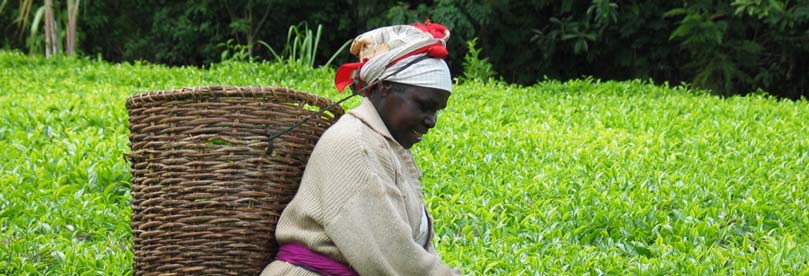
And conversely, this is the problem that Fair Trade companies solve. They respect all levels of the individual and don't treat them as just expendable pieces of biological meat. Fair trade rules dictate policies such as reasonable working hours, a livable wage, health insurance, along with sick and personal leave. All designed to improve biological quality, provide equal social dignity, and give time away from work for the individual to grow.

That's what makes fair trade goods better than their non fair trade counterparts. They're supported by many of the codes of the MOQ. From 'the law of the jungle' in that they improve the health of their workers, 'The Law' in that they respect the workers right to not be abused, and finally the Code Of Art by providing downtime and space for growth.

That's why being on the right side of these codes is what makes, when possible, buying fair or locally made goods moral and supported by the MOQ.

TOPICS:
Self Improvement

Human behavior creating global warming is metaphysically immoral and veganism is a moral solution.

In the previous post we established that not changing our behavior in response global warming is immoral. In line with this, according to a report by two World Bank advisers the animal agriculture industry surprisingly contributes to around fifty-one percent of all global emissions. From this study we can conclude that consuming less meat would dramatically reduce our harmful impact on the planet. But why haven’t we heard of this before?

To answer this, the video above shows some of the statistics found in a documentary called Cowspiracy, and it explores why this might not be as well a known cause as the direct burning of fossil fuels. Reasons provided are the reluctance of charities to confront the public about such a large change in behavior, and the power of the animal agriculture industry in stamping out dissent.

But in addition to morally valuing biological life on earth by not suffocating it with inorganic CO2 there is another benefit of not consuming animal meat. This benefit is the correct valuing of biologically more evolved animals over that of their less evolved counterparts – plants and grains. As Robert Pirsig writes in Lila:

An evolutionary morality,.. would say [eating meat is] scientifically immoral for everyone because animals are at a higher level of evolution, that is, more Dynamic, than are grains and fruits and vegetables.. It would add, also, that this moral principle holds only where there is an abundance of grains and fruits and vegetables. It would be immoral for Hindus not to eat their cows in a time of famine, since they would then be killing human beings in favor of a lower organism.

Robert Pirsig

Thirdly, that’s not to mention the growing list of health benefits that can be found in reducing the amount of meat in your diet and improving the overall biological quality of the people on the planet.

Therefore these three key reasons make veganism moral on many levels and supported by the evolutionary hierarchy of the Metaphysics of Quality.

TOPICS:
culture

Jeni Cross who is a sociology professor at Colorado State University, talks about the three Myths of Behavior change. In these notes below I’ve ignored the SOM jargon and instead written about how the research applies to values. I could find five main takeaways from the 3 Myths.

MYTH 1. Information is enough to change behavior.

  1. If we speak to what folks value by making things tangible, personalized and interactive this is far more likely to change their mind than simply supplying them facts.

  2. Also, because folks are also loss averse, that is, they don’t want to lose value they already have, they are far more likely to change their behavior if it means they won’t lose value.

MYTH 2. Changing attitudes changes behavior.

  1. You can actually set qualitative behavioral expectations to change behavior and attitudes.

  2. You can also change behavior by speaking to what folks already value.

MYTH 3. Folks know their values.

  1. Social norms influence behavior far more than folks give credit for. If you speak to folks value of social norms, then you’re far more likely to change their behavior than they give credit for.
TOPICS:

Soyen Shaku Image

– In the morning before dressing, light incense and meditate.
– Retire at a regular hour. Partake of food at regular intervals. Eat with moderation and never to the point of satisfaction.
– Receive a guest with the same attitude you have when alone. When alone, maintain the same attitude you have in receiving guests.
– Watch what you say, and whatever you say, practice it.
– When an opportunity comes do not let it pass by, yet always think twice before acting.
– Do not regret the past. Look to the future.
– Have the fearless attitude of a hero and the loving heart of a child.
– Upon retiring, sleep as if you had entered your last sleep. Upon awakening, leave your bed behind you instantly as if you had cast away a pair of old shoes.

Soyen Shaku

Wikipedia Link

TOPICS: