
The Real Enemy of Art Isn’t 'Greed'
How Our Current Metaphysics Enables Social Power To Immorally Decide Art And Culture.
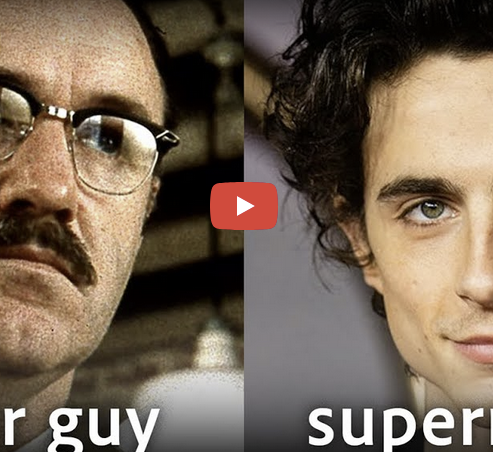
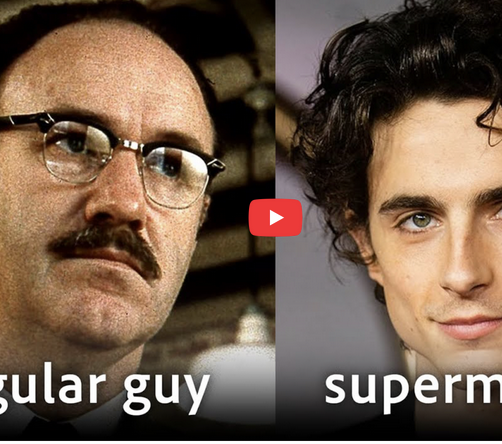
I’ve just watched the above video and whilst I was highly impressed by its research and presentation - I was left wholly disappointed by the end. It's a video essay which is similar to many online complaining about the quality of modern film. Well researched - well presented - but very thin on actual diagnosis.
This video in particular spends much of its 13-minute runtime demonstrating the problem that we don’t have “every-man,” “ugly” actors in today’s films. Apart from briefly settling on an early sub-diagnosis that “people generally look younger now,” it really only spends the final few seconds actually answering why. Which is pretty wild for a video titled 'Why aren't actors ugly anymore?' but yeah surprisingly not uncommon.
The answer the video does finally settle on - 'greed' - massively undersells the root cause of the problem too. Greed isn’t the root cause; it’s the expression of a key value that sits on the immoral side of a deeper conflict. That conflict is not necessarily between different values held by different groups of folks, but between shared values organized in opposing ways. Indeed, using the lens of the Metaphysics of Quality (MOQ) to look at these conflicting values is far superior than our current metaphysics. It shows clearly how one group of values which serve social power and others that serve intellectual and Dynamic Morality - are both in conflict and it clearly shows which group of values we ought to follow.
Because what’s at stake here is not whether we value meaning, creativity, and connection - we all do - but whether those values are allowed to guide culture, or are subordinated to other values that immorally concentrate social power and exclusively serve it. This is a conflict that is the most significant moral struggle of our time - the conflict over Intellectual Morality.
So the answer to the question “why are there no ugly actors?” is found with far greater clarity by looking at the politics and the monopoly dynamics with our better - morality focused lens - and find conclusions that go beyond simply greed and politics and into deeper issues of evolutionary morality.
In the previous post I outlined ways in which American culture has been immorally divided through politics with the aid of an amoral metaphysics in service of social level power. I have also outlined previously how an aesthetic and general atmosphere of amoral coldness is actively supported by our current metaphysics and how this undermines the importance of warmth, emotion and values generally within films themselves.
In this piece I’d like to combine these two themes and show how concentrated social level power - at the violation of Intellectual and Dynamic Morality - reveals itself in culture and the arts of both film and music.
Because it's far too easy for film studio executives to exclaim that what “the people” want is blockbuster franchises, Netflix slop, or sequels to previously successful films. This claim shrouds not just deliberate decisions made by those executives in the name of the power of their corporations - but also hides the market realities which granted these executives that power in the first place. Contrary even to cultural critics common claims - the popularity of these films is not the active choice of “the people”.
“The people” didn’t choose the lack of a competitive market and the hollowing out of mid-market films and the risk taking that went with it. Indeed "the people" aren’t expressing preferences in a free market; they’re reacting to saturation, hype, and a lack of alternatives. The current situation - and especially the types of films that are being made - are a function of the consolidating of social-level power in the hands of the few. The few who have been empowered to dictate to the masses what's acceptable to show them on screen.
In other words the lowering quality of modern films has occurred primarily as a result of an amoral metaphysics and its exploitation by social level power.
Because in case anyone has looked at the film industry over the last half century - consolidation and monopoly - as with the American economy as a whole - has been the norm.
With that consolidated power studios are incentivised to go for the big smash hit - and to sharply focus on its success to justify their increasingly large stock market valuations. That focus on success at all costs has increasingly eliminated anything within a film that could be deemed a risk. Blockbusters, franchises, IP recycling, and spectacle are all risk-management strategies.
Complex plots, darker or unusual lighting, unusual shot composition, gritty and realistic looking makeup and costumes, realistic looking sets, an unknown star, and as the above video shows - even the ‘ugliness’ of the actors themselves is all too often spreadsheeted away from modern films.
When these films succeed, the logic reinforces itself. The more synthetic the output becomes, the more justification there is to continue in that direction. The result is culture increasingly indistinguishable from advertising - art aimed at the lowest common denominator, not because people demand it, but because it serves the expansion and preservation of social power.
Those who lose out are not just audiences, but the values represented by Intellectual and Dynamic Morality. When marketing budgets dwarf artistic budgets, creating high quality art becomes optional. When slop succeeds, social power is further legitimised. The race to the bottom accelerates.
Technology has only intensified this. Streaming platforms encourage isolated, distracted viewing, shorten theatrical windows, and optimise films for small screens and divided attention. Scenes are repeated, pacing is flattened, lighting is washed out, and action is front-loaded. These choices are framed as serving audiences, but overwhelmingly they serve platform incentives.
Streaming platforms may claim these changes are what audiences want, but this avoids the harder question of audiences’ longer-term values. And with AI just over the horizon - these issues will only become even more pertinent. Are people demanding this race to the bottom, or are platforms satisfying short-term social-power incentives while neglecting the cultural consequences of shaping our shared stories this way?
As I've touched on previously, our amoral metaphysics and its enabling of social level power goes beyond aesthetics and story structure and into the values of the story's themselves.
With an amoral metaphysics, social power has empowered itself to cast aside the cultural and moral importance of the stories it creates. Something which for the great majority of our shared past has been their understood function.
Since the beginning of human culture, stories have never been “just entertainment.” They’ve been one of the primary ways societies made sense of value.
Through stories, cultures didn’t just reflect what they believed - they tested it. They compressed lived experience into memorable form so ideas about loyalty, courage, justice, betrayal, suffering, and humility could survive beyond any one generation. Long before abstract moral theory or formal law, stories showed people what mattered by placing values into real lives and real consequences. They trained moral compasses without needing constant enforcement, giving communities shared reference points for how to act, what to value, and what to resist.
To dismiss stories as “content” or even "just entertainment" would once have been incoherent to humans in the past, because they were precisely how the moral lessons of human experience were comprehensible.
Yet aided by an amoral metaphysics this understanding of the cultural significance of stories has been increasingly undermined - to the point where judging by most blockbuster films and much of the streaming slop of today - it's almost foreign. Social power has viewed stories not just as merely amoral 'content' to capitalise - but also for their moral component to be mostly avoided, ignored, or shrouded behind the shine of spectacle.
That's not to say there isn’t a place for films which seek to entertain. But even the idea that entertainment and morality need be opposed in the first place is antithetical to a true understanding of human experience.
You can see this shift clearly when you compare the kinds of films that dominate today to mainstream cinema from the three decades between the 80s and 00s. The key difference is older popular films treated moral change as transformative - something that had to occur for a story to resolve - whereas many contemporary films treat morality as texture - something to be displayed without ever being allowed to necessarily determine outcomes.
Older popular films were rarely embarrassed about stating a moral lesson, even when they were broad commercial hits. Jaws was about acceptance versus denial. E.T. centered empathy and the protection of the vulnerable. Even unapologetically commercial action films like Die Hard or Independence Day were comfortable making clear moral claims by the end. Die Hard ultimately affirms humility and solidarity over lone-wolf bravado, while Independence Day insists on collective action and sacrifice for a greater good.
Arnold Schwarzenegger’s True Lies is entirely driven by transformation too - with both the title character and his wife becoming more fully realized versions of themselves by the films end. Terminator 2 similarly structures its entire plot around transformation rather than endurance: the Terminator evolves from programmed killer to ethical guardian, Sarah Connor moves from traumatized reactionary to deliberate moral actor, and John Connor grows into leadership. The action exists primarily to test and confirm moral change rather than merely to prolong survival.
The original Star Wars trilogy was equally explicit about moral growth: learning through failure, the dangers of unchecked power, the necessity of restraint, and the possibility of redemption. Luke becomes worthy not because he is innately pure, but because he learns humility, patience, and self-control - the way of 'the force' taught by experienced elders. Power without discipline is the villain. Moral clarity is not easy, but it is decisive.
Later iterations largely abandon this kind of protagonist moral development in favor of hollow labeling, painting protagonists as unquestionably, naturally good, un-tethered from meaningful failure or growth. Instead growth is replaced by moral assertion. Even Luke’s moral growth from the first trilogy was undermined and transformed into nihilistic despair.
This shift matches that of many other modern streaming action films like Red Notice, The Gray Man, or Extraction which adopt the surface language of moral seriousness - corruption, exploitation, institutional rot - while ensuring nothing actually rides on it. Character growth, if it occurs at all, is a result of the action in the film, not the driver of it. Consequences are aestheticized, flattened, or erased.
This also lines up with many other contemporary prestige, streaming, or blockbuster films too. Films like Once Upon a Time in Hollywood or Bohemian Rhapsody present style, performance, and vengeful payoff as unquestioned goods, while deeper moral questions - power, exploitation, humility, justice - are quietly backgrounded. Others, such as The Wolf of Wall Street, American Hustle, or War Dogs, gesture toward critique but refuse moral resolution, leaving audiences suspended in ironic distance rather than judgment. Wrongdoing is displayed vividly and seductively, but never meaningfully confronted.
As I’ve mentioned previously, Don’t Look Up is emblematic here as a political film: it partially identifies elite failure, but collapses into nihilism rather than moral clarity, mistaking exhaustion and despair for critique. Awareness substitutes for judgment. The film knows something is wrong, but refuses to boldly point at the fabricated and unproductive division that created that exhaustion - or what should follow.
Irony itself has become another way to hide any clear message. Films like Deadpool or many others from the post-Endgame MCU preempt seriousness through constant meta-humor, ensuring that no moral position is ever held long enough to risk embarrassment. Violence, power, and sacrifice are endlessly referenced, endlessly undercut, and ultimately rendered weightless.
What emerges is cinema that avoids moral lessons not out of sophistication, but utility. Not just because avoiding clear judgements enable endless film continuation - but because clear judgement risks offending or even risks putting social power in a moral box.
To make clear moral judgement would be to go against the mood of the times which is moving increasingly in an amoral direction. To make moral judgement risks alienating not just local American audiences, but the elites who fund the films, or the global elites who have different views on human rights. To make moral judgement risks folks realising that one of the biggest problems of morality of today isn't necessarily the values of each other - but of social power which prevents change for the better. Far safer to hide behind a metaphysics which encourages 'serious' amoral neutrality before anything else...
Modern films aren’t just written differently - they’re often watched differently too. As social power consolidates and an amoral metaphysics becomes dominant, detachment becomes the default posture for both creators and audiences alike. Films are built to be observed, not morally entered; irony replaces conviction; and taking a story’s values seriously is treated as either naive or 'cringe'. After all - any disappointment can be passed off as temporary whilst simply waiting for the sequel to make any moral arc amends.
Indeed, as the above video demonstrates, the types of populist 'everyman' films that would usually increase the cultural connection of common folks to each other and remind them of their shared values are undermined. Social power demands amoral perfection and any ordinary looking folks or stories about ordinary lives are often conveniently deemed 'too ugly' or 'too boring' to ever make it on screen.
Even film criticism, in its effort to be taken seriously as an academic pursuit, often shies away from the moral content of films altogether. Instead, it focuses on everything around a film - cinematography, writing, directing, acting, score, structure, technique - while rarely asking whether the values a film promotes are good or bad, whether its protagonists actions are worth admiring, or whether the story leaves the culture better or worse off.
When those questions are raised, they’re often dismissed as “subjective”, as if moral evaluation itself were un-serious or illegitimate. That dismissal conveniently ends the discussion before it really begins.
While their reluctance has begun to shift with some modern YouTube criticism - which is more willing to openly grapple with values, meaning, and moral consequence - the deeper aversion remains. Moral judgment is still widely treated as something to be avoided, rather than as the central reason a story matters at all.
Given our amoral metaphysics, this reluctance to discuss morality and values is understandable. But it is not inevitable. With the Metaphysics of Quality, we are fully equipped to have productive discussions about values and morality - discussions grounded not in mere subjectivity, but in a logical, moral, and evolutionary understanding.
Indeed, as the video above inadvertently demonstrates, film reviewers and cultural critics are often resistant to discussing politics or economic arrangements. Sometimes this is out of fear of alienating one half of their audience. Other times, it's simply a lack of sanguine awareness of how much control we have over them and how deeply these arrangements are shaping our culture, values, and the stories we tell ourselves.
In either case, the underlying condition is the same: an amoral metaphysics that treats economic and political structures as neutral, inevitable, or beyond moral evaluation. Social power takes advantage of this metaphysical blind spot to quietly displace moral judgment and put itself in charge. Over time, it has shaped our political divides, narrowed how issues are discussed, and kept people locked into opposing camps while deeper conversations about shared values are avoided altogether.
This works by shrouding clear moral decisions behind the language of market logic, cultural inevitability, or neutrality - presenting outcomes as “just how things are” rather than as choices that privilege some values over others. Acceptance of this framing is then subtly enforced: question it too directly and you risk being pushed into an ideological label, where moral reasoning gives way to loyalty, and questioning the chosen frame becomes the real sin.
It's been well documented that with the rise of monopoly and economic consolidation are the conditions rife for increased amalgamation of social level power into authoritarianism and fascism.
And today - we can see that this is true not just in the political and economic sphere but in the sphere of art as well. Where art neglects its vital role of encouraging high quality values and behavior in the culture at large. Where art also neglects its political and cultural moment. Where art neglects these things - its critical role in serving Intellectual and Dynamic Morality is wholly undermined paving the way for social power to devastatingly expand.
This trend of social power consolidation is true not just in film either but in the music industry too. Where there were previously dozens of major and mid-tier labels throughout the last five or so decades these have been reduced to just 'The Big Three'.
With that cultural consolidation of social level power and the disappearance of mid tier labels- artists have far less power in negotiating deals and bargaining. While digital distribution has lowered entry barriers - power in owning rights and monetizing them at scale has become even further concentrated.
Indeed, labels are now in publishing, merchandising, touring, branding and promotion. This is immense power that makes it essentially impossible for independent artists to compete.
Also streaming didn't weaken label power - they still own all the music. So their relationship with streaming platforms is more symbiotic than it is imbalanced.
But the streaming platforms aren't without social power of their own. They wholly control the visibility of artists on their platforms - especially through the algorithms of music they recommend. This is essentially a near-monopolistic control over what the culture can find valuable in music.
As with the film industry - all this consolidation essentially transforms the music industry into artist risk aversion and the following of fixed 'winning formulas' rather than genuine talent. Existing and established artists are given the majority of opportunity whilst for upcoming artists there's many barriers to greater success.
Artists now are even expected to have minimal artistic growth throughout their careers and have a clear image and direction outlined before being offered opportunities. As a result fewer distinct voices emerge over time. Labels select for artists who are legible as brands: have clear aesthetics, personas and easy to understand narratives.
Risk - then - is often pushed onto the artists financing themselves. As a result it's increasingly the case that only the already-wealthy are given the lions share of opportunity.
Songs too - are now often tailored to algorithms. These algos are controlled entirely by the socially powerful platforms and result in art which is in service of that power rather than what artists or even audiences necessarily prefer.
Songs become shorter as well - with hooks within seconds, and are also often mood coded for playlists. Risky structures, long builds, or stylistic genre-benders are 'too risky' and so filtered out before even being released. Genres that don’t scale globally or fit platform categories lose institutional support.
All of this immorally puts social power above the artistic pursuit of creation in response to Dynamic Quality. It also immorally puts social power above the control of culture rather than Dynamic or Intellectual values.
As with our film example - this change didn't come about because it's best that there is so much social level power involved in the creation of art in the music industry. "The people" didn't demand this. This is the result of social level power seeking to increase that power, reduce risk and succeed with minimal effort.
To be clear - this instinct of following cultural success is understandable. But when social power undermines or opposes Dynamic and Intellectual Morality, it becomes immoral. Markets should therefore be shaped so that incentives and regulations reinforce and uphold these higher moral codes.
However as it is now - just as with elite framings of ('right-wing' authoritarian) populism as the choice of the people - so the choice of the algorithms are framed as purely the choice of the people. Social power conveniently neglects the value of a higher level and instead hides behind the false veneer of an amoral and democratic choice - alluding to Dynamic Morality - when it is anything but.
These trends aren’t just true in film and music - though, due to their outsized economic impact, social power has come to disproportionately leech much of that influence for itself. But these trends are also true to varying degrees across all art. Literature, visual arts, and even digital media for example - all suffer from similar issues.
What should be clear by now is that film and music are not shaped by individual artistic intent alone. They are deeply shaped by economic and political conditions. At a deeper level still, they increasingly reflect an amoral metaphysics - one that privileges the expansion and preservation of social power over doing what's right.
That metaphysical frame doesn’t just undermine artists creating the best art they possibly can. But it also corrodes our ability to talk about art and culture at all. Just as social power uses an amoral metaphysics to push art toward amorality, it also pushes cultural discussion away from meaningful political, economic, and artistic critique. Moral questions are flattened to relativism, displaced and pushed aside, or dismissed entirely before they can be seriously examined.
So modern films and music aren’t worse because audiences changed or artists lost talent. They aren’t worse simply because of “greed,” and they aren’t worse only because of economic or political arrangements. They’re worse because concentrated social power has used an amoral metaphysics to shape culture in its own image - allowing it to control cultural outcomes in ways that systematically undermine Intellectual and Dynamic Morality.
And this is where the Metaphysics of Quality first comes to the fore. At a minimum, the MOQ clearly supports the artists who are on the correct side of this conflict. It promotes a deeper appreciation of the values that drive their work, and the reduction of monopoly and the social power it represents in the industry. But the MOQ also provides artists and common folks alike with a moral lens and language that allow them to orient themselves within cultural evolutionary conflicts. It helps everyone to clearly see which values are being served, and which are being suppressed.
Applied directly to film and art criticism, the MOQ gives reviewers and audiences a way to evaluate a work’s moral story without continual justification. Viewers can ask whether a film actually supports the values it gestures toward. They can consider whether its characters’ actions are worth admiring or instead serve as meaningful moral warnings. They can also ask whether there is genuine moral growth and whether the consequences make sense. Perhaps most importantly, they can ask whether the story leaves the culture better or worse off for having experienced it.
In doing so, moral evaluation can no longer be dismissed as “just subjective” and instead can be recognised as an assessment of real qualities present in the work itself.
The usefulness of the MOQ doesn't stop with audiences or critics either. It also applies to those closer to the levers of power. Media organisations can use it to scrutinise political and economic consolidation rather than normalise it. Academics writing from amoral frameworks can check whether those frameworks quietly justify the expansion of social power at the expense of common folks and higher morality. Politicians passing laws can use it to assess whether they are serving Intellectual and Dynamic Morality rather than merely reinforcing existing power structures. Even corporate leaders and the workers within those institutions can use the MOQ to test whether their decisions align with evolutionary morality or merely advance social-level dominance.
I’m not naïve to think these changes will arrive any time soon. Of course the folks who are closest to power are going to be the least likely to see the utility of this lens. The pragmatism of following power is very strong, and standing apart from it all too often comes with real personal cost. Especially in the modern political environment. But what the MOQ does do is provide folks within each of these areas the uniquely intellectual grounding to follow good conscience and to intellectually and logically support the right thing.
And this is where the MOQ’s second major strength becomes clear. Because by their very nature of being far from the halls of influence - common folks have a vitally important democratic role in ensuring Intellectual and Dynamic Morality are served. And at every point where social power expands, it empowers folks to identify the immorality involved without collapsing into any of our modern day pitfalls of cynicism, relativism, self-righteous sanctimony, tribal loyalty or even the ultimately empty accusation of “greed".
When outcomes are framed as “inevitable,” “what audiences want,” or “just how the market works,” the MOQ instead gives people the tools to expose the social power shaping those decisions and to strip away the false neutrality that conceals it. Crucially, it uniquely does this using intellectual logic - the language of elites themselves. With a clear understanding of the MOQ - moral criticism can't just be dismissed as emotional or naïve - but as a valid understanding of how things work and also as a clear guide on the way forward.
The Metaphysics of Quality lens takes us much further than simply identifying immorality when it appears then. Its capacity for compassion, clarity, confidence and direction - is vitally important too. It gives folks a way to point at immorality in productive ways that are more likely to bring about change. It also helps to ensure folks can act with far greater confidence that higher values are guiding what we create, what we celebrate, and what we become. And that's better for all!